Thursday, 10 September 2026
When a procurement team shortlists an engine parts manufacturer in India, the conversation usually opens with price and lead time. But the question that actually predicts whether a supplier can hold your program together for the next five years sits further upstream: can their process repeat the tolerance, the finish and the batch-to-batch consistency your engine platform needs, at volume? At Presco-Mec Group, every mounting bracket, oil sump, timing cover or welded sub-assembly that leaves our Faridabad units passes through the same six connected stages — tool design, tool manufacturing, stamping and forming, welding, finishing and inspection. Here's what happens at each one, and what it should tell a sourcing manager evaluating an automotive engine parts manufacturer in India.
Stage 1 — Tool Design & Development
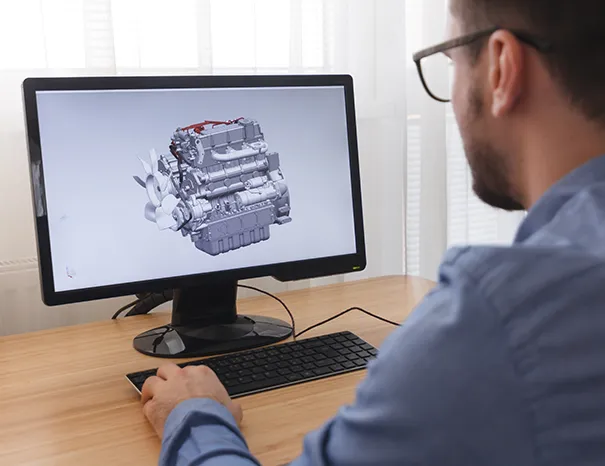
Every engine component starts as data, not steel. Our tool design and development team works in SolidWorks and CAD/CMM software, building the die and fixture models that will eventually stamp, form and hold an engine bracket or cover to print. For an engine parts manufacturer, this stage is where most downstream problems are prevented rather than fixed: engaging with a customer's product design at an early stage lets our engineers flag manufacturability issues — tight radii, inconsistent wall thickness, awkward weld access — before a single tool is cut. Feasibility and design-for-manufacturability (DFM) input at this stage typically saves more cost and lead time than any negotiation that happens later in the sourcing cycle. For procurement teams, this is the first real signal of supplier maturity: ask to see a DFM report, not just a quote.
Stage 2 — Tool Manufacturing: In-House Tool Room + CNC Precision
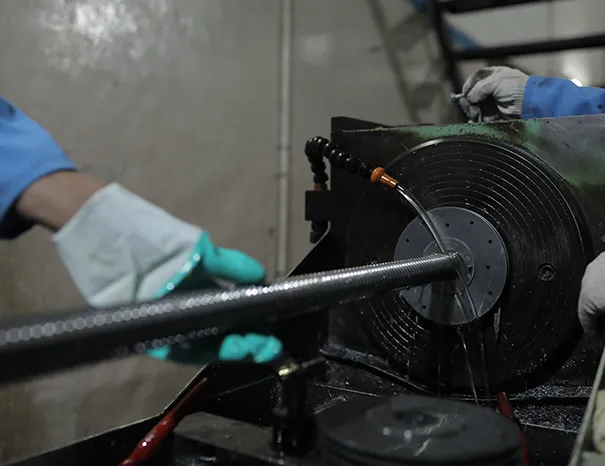
Once a design is frozen, it moves to our in-house tool room, supported by CNC machining centres for precision die components, and — where a program needs additional capacity or a specialised process — a network of associate tool rooms across India and the wider Asia region. This hybrid model matters for OEM sourcing: it means tooling lead times can flex to program timelines without compromising the tolerance the tool needs to hold across its production life. Every tool built this way feeds directly into the press shop, which is why tool-room capability is one of the most overlooked line items in a supplier audit — a mediocre tool quietly erodes part quality and press uptime for the life of the program, long after the tooling invoice is paid.
Stage 3 — Stamping & Forming in the Press Shop
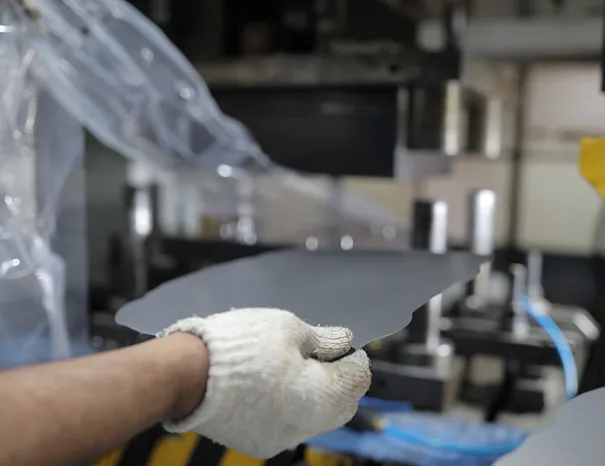
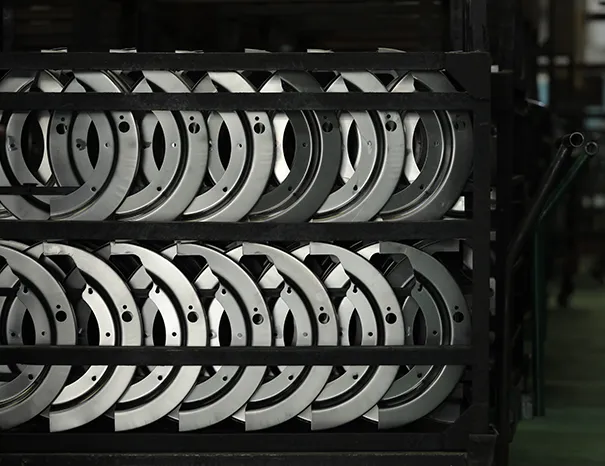
This is where engine brackets, covers, sump components and structural plates actually take shape. Our press shop runs a wide range of hydraulic and pneumatic presses up to 400 tons capacity from globally recognised press brands, giving us the range to run everything from small-tonnage trim-and-pierce operations to heavier forming work on structural engine components. High-volume engine programs typically run on progressive tooling, where multiple operations — piercing, forming, trimming — happen in a single tool pass, which is what makes consistent, high-speed production of engine mounting brackets and covers viable at OEM volumes. For a sourcing manager, press tonnage range and press count aren't vanity numbers — they define whether a supplier can actually take on your part's forming complexity without booking it onto an undersized machine and living with process risk for the life of the program.
Stage 4 — Welding & Sub-Assembly
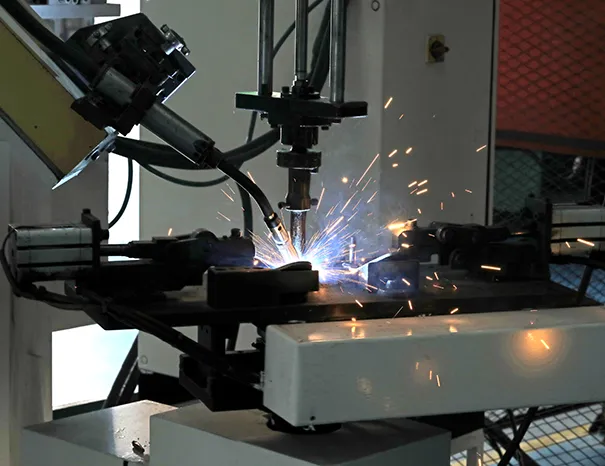
Many engine components — sub-assemblies combining a bracket with a reinforcement plate, or a cover with a mounting flange — are joined in our weld shop using MIG welding, robotic welding, spot welding and projection welding, matched to the joint type and the production volume. For repetitive, high-volume joints, we've developed dedicated SPMs (special-purpose machines) with established equipment partners, which hold weld parameters consistent across shifts and operators rather than relying on manual technique alone. This is the stage where "engine parts supplier" and "engine parts manufacturer" genuinely converge — welded sub-assemblies are where fabrication skill and process discipline show up first, and where inconsistent suppliers usually reveal themselves during PPAP.
Stage 5 — Finishing: PTCED & Powder Coating
Engine components live in a demanding underhood environment — heat cycling, road spray, engine-bay moisture — so finishing isn't cosmetic. Parts requiring corrosion and weather resistance are run through our PTCED (cathode electro-deposition) line and conveyorized powder-coating line, both using environment-friendly, water-based coating technology. This gives engine brackets, covers and sump components a consistent, scratch- and weather-resistant finish before they're packed for dispatch — an important detail for OEMs specifying long-term corrosion warranties on underhood parts.
Stage 6 — Inspection & Testing
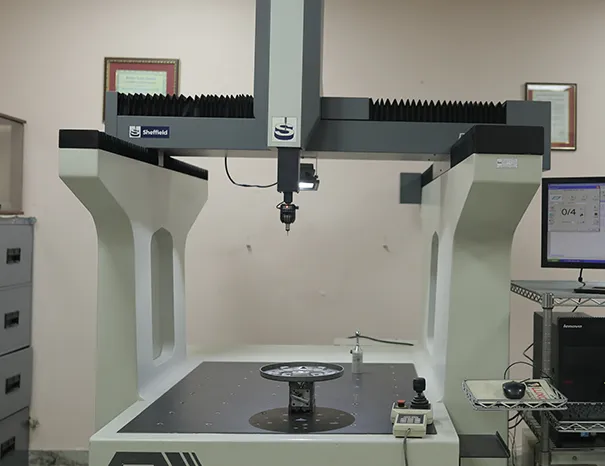
Nothing ships without passing through our standards room, which is equipped with a Coordinate Measuring Machine (CMM) capable of measuring to a tenth of a micron, along with a profile projector and Faro Arm for complex geometries. For an engine parts manufacturer supplying OEMs and Tier-1s, this is where dimensional data is generated for first-article approvals, PPAP submissions and ongoing batch verification — not just a final gate-check before dispatch, but a running record that a part built in month one still matches the part built in month twelve. For procurement managers, this stage is worth asking about directly: what equipment generates your supplier's dimensional reports, and can they share sample CMM data before you commit?
Engine Parts Manufacturing Process: What to Check at Each Stage
Before shortlisting an automotive engine parts manufacturer, it's worth walking the same six stages during your supplier audit:
- Design stage: does the supplier run DFM reviews, or only quote against a finished drawing?
- Tooling: is it built in-house, outsourced, or a blend — and how is tool quality controlled either way?
- Forming: what press tonnage range and press count does the shop floor actually run?
- Joining: which welding processes are available, and are high-volume joints run on SPMs or manual stations?
- Finishing: does the coating line match your corrosion/weather-resistance specification, and is it done in-house?
- Inspection: what equipment generates dimensional data, and can sample reports be shared pre-award?
Get a Quote
Presco-Mec Group runs all six of these stages in-house at our IATF 16949:2016 certified units in Faridabad, Haryana, backed by 38+ years of experience supplying engine, brake, chassis and assembly components to automotive OEMs and Tier-1s. If you're evaluating an engine parts manufacturer in India for an upcoming program, share your drawings and volumes with our engineering team, and we'll walk you through exactly how your part would move through this process.
FAQs
Our tool design and development team uses SolidWorks and CAD/CMM software to build die and fixture models, working with the customer's product design from an early stage to identify manufacturability issues before tooling is cut.
Both, depending on program needs. We operate an in-house tool room supported by CNC machining, and also work with a network of associate tool rooms across India and Asia when a program needs additional capacity or specialised tooling processes.
Our press shop runs a wide range of hydraulic and pneumatic presses up to 400 tons capacity from globally recognised press brands, covering everything from precision trim-and-pierce operations to heavier forming for structural engine components.
We use MIG welding, robotic welding, spot welding and projection welding, selected by joint type and production volume, with dedicated SPMs (special-purpose machines) built for repetitive high-volume joints to keep weld parameters consistent across shifts.
Components requiring corrosion and weather resistance are processed through our PTCED (cathode electro-deposition) line and conveyorized powder-coating line, both using environment-friendly, water-based coating technology suited to underhood conditions.
Our standards room is equipped with a Coordinate Measuring Machine (CMM) capable of measuring to a tenth of a micron, along with a profile projector and Faro Arm, generating the dimensional data used for first-article approvals, PPAP submissions and ongoing batch verification.
Beyond price and lead time, ask about DFM practices at the design stage, whether tooling is in-house or outsourced, press tonnage range, which welding processes are available, finishing capability against your corrosion specification, and whether sample CMM inspection data can be shared before award.
About the Author
This post was reviewed by Sunil Goyal, Chief Operating Officer, Presco-Mec Group. Sunil brings 28 years of experience in supply chain management and international marketing, including prior roles with Tata, Eicher, Airtel and the Hero Group, and works closely with Presco-Mec's engineering and tool room teams on process capability for OEM and Tier-1 sourcing programs. Connect on LinkedIn: https://www.linkedin.com/in/sunil-goyal-1796442b/
For inquiries, you can reach Presco-Mec Group through the website www.prescomecgroup.com, via email at info@prescomecgroup.com , or on WhatsApp at +91 89299 81200 to discuss your requirements.
Published: 10 September 2026