Tuesday, 22 September 2026
Ask most people what goes into an automotive engine and you'll hear about the block, the crankshaft, the cylinder head. Rarely mentioned: the family of precision pressed components — brackets, covers, sumps, heat shields — that hold everything else in place and protect it from heat and vibration. These parts are formed, not cast or machined, and the quality of that forming process has a direct bearing on how the engine performs over its working life. As an established engine parts manufacturer in India, Presco-Mec Group builds these components through its own press shop, and this article looks at what actually happens inside precision pressing — and what it means for procurement teams sourcing from an automotive engine parts manufacturer.
What Makes a Component a "Precision Pressed Part"
Pressing (also called stamping) forms flat sheet-metal coil into a three-dimensional shape by forcing it into or around a die under controlled pressure. The word “precision” matters here: an engine bracket or cover isn't just bent to roughly the right shape, it is formed to hold specific dimensions, hole positions and flatness within tolerances that let it bolt directly to an engine block or powertrain mount without shimming or rework. That's a materially different bar than pressing a non-critical body panel, and it's why engine-adjacent components are usually made by press shops with dedicated automotive tooling and inspection discipline, rather than general sheet-metal fabricators.
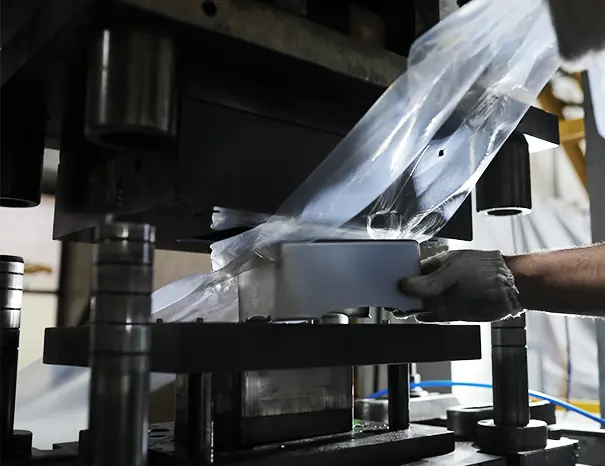
Inside the Press Shop: How Die Design Drives Precision
The finished part is only as good as the die that formed it. Die design has to account for how the chosen steel grade and thickness will actually behave under forming load — not just the geometry on the drawing. Two failure modes come up again and again in pressed engine components if this isn't controlled properly:
- Springback: formed metal partially relaxes back toward its original shape once forming pressure is released, which can throw off critical angles and hole alignment if the die isn't compensated for it in advance.
- Wrinkling and tearing: uncontrolled material flow into the die cavity — usually from incorrect blank-holder pressure or an unsuitable material grade — shows up as wrinkles in unstressed areas or, at the other extreme, cracking and tearing where the metal is stretched too far.
A press shop with genuine die-engineering depth designs around both issues from the start — compensated tooling geometry, correctly specified blank-holder force, and forming parameters matched to the material — rather than discovering them during first-article inspection.
Material selection plays into this too. The same bracket geometry can behave quite differently in a higher-strength steel grade versus a softer one — formability, spring-back tendency and the risk of tearing all shift with grade and thickness. An experienced press shop factors this in at the die-design stage rather than treating material choice as a variable someone else has already decided.
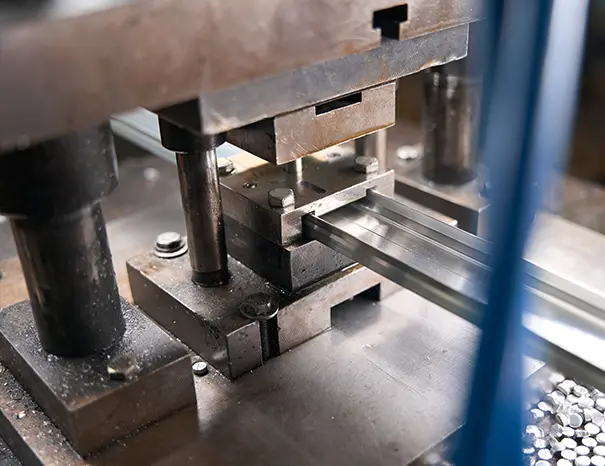
From Pressed Blank to Engine-Ready Component
Forming is rarely the last step. Most engine brackets, covers and heat shields also need trimming and piercing, and many are welded into multi-piece sub-assemblies before moving to corrosion-resistant surface treatment and final dimensional inspection. We've covered that fuller process chain — welding, coating and inspection — in an earlier post on how engine components are manufactured end to end; the focus here stays specifically on the forming step, because it's where the part's fundamental accuracy is set and where the most costly mistakes, if any, tend to originate.
Why Precision Pressing Matters for Engine Reliability
A bracket that's slightly out of tolerance may still bolt on — but under the vibration and thermal cycling an engine bay generates continuously, small errors compound. Misaligned mounting holes create stress concentrations that can lead to early fatigue cracking. A cover that isn't flat where it meets its mating surface can trap moisture or fail to seal properly. None of this is usually visible at the point of assembly; it shows up months or years later as a warranty claim. This is precisely why tolerance discipline in the press shop, not just at final inspection, is worth understanding before committing volume to a supplier.
It's also why procurement teams evaluating an engine-component sourcing decision often gets more useful signal from asking how a supplier controls the forming process than from a general capability list. A supplier who can walk through how a specific bracket's die was designed, or show first-article and ongoing CMM data for a comparable part, is demonstrating exactly the kind of process control that prevents field failures later.
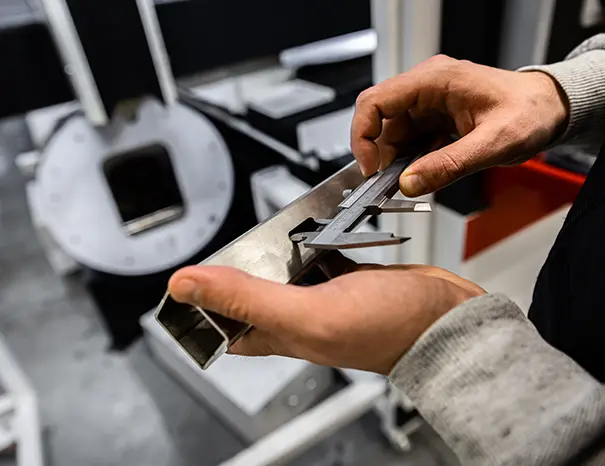
Evaluating a Press-Shop Partner for Engine Components
A few pointed questions separate a genuine precision press shop from a general-purpose fabricator:
- Is die design and tooling development handled in-house, or outsourced with limited visibility into how forming defects are addressed?
- Is the press shop willing to engage in a Design for Manufacturability (DFM) review before tooling is committed, rather than only after a finished drawing is handed over?
- What dimensional inspection capability exists in-house — specifically, is CMM verification available for every batch, or only on request?
- Can the supplier show first-article inspection reports and ongoing quality records for a comparable engine component?
- Does the supplier hold IATF 16949:2016 certification, confirming automotive-grade process discipline?

Presco-Mec's Press-Shop Credentials
Presco-Mec Group has operated as an automotive engine parts manufacturer in India for more than 38 years, with an in-house press shop covering tooling and die development through to forming, welding, surface treatment and CMM-based inspection at our two Faridabad manufacturing units. Our facilities are certified to IATF 16949:2016, ISO 9001:2015, ISO 14001:2015 and ISO 45001:2018, and our D&B D-U-N-S® number (65-006-5357) supports fast vendor verification for procurement teams running formal onboarding. A warehouse network across Pithampur, Jamshedpur, Pune and Chennai supports predictable delivery, and we're trusted by 10+ leading OEM and Tier-1 customers across two-wheeler, passenger, commercial, tractor and off-highway platforms.
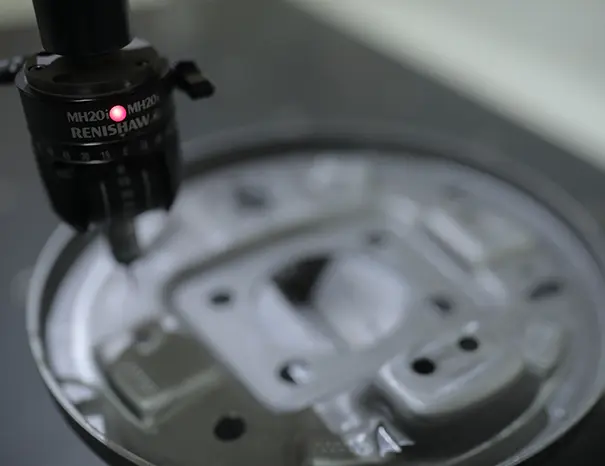
For new engine brackets, covers or heat shields, Presco-Mec's engineering team can review the component design for manufacturability before tooling is committed.
Request a Quote
Share your engine parts requirements with our engineering team and we'll come back with a feasibility response.
FAQs
Progressive die stamping moves a metal strip through a sequence of stations within a single die set, with each station performing one operation — piercing, bending, forming — until a finished part emerges. For engine brackets, covers and sumps, it delivers highly repeatable dimensions across large production runs, which is essential when a part must fit consistently against an engine block or powertrain mount.
Springback occurs when formed metal partially returns toward its original shape after the forming force is released, while wrinkling results from uncontrolled material flow into the die cavity. Both are controlled at the die-design stage through compensated tooling geometry, correct blank-holder pressure, and material-specific process parameters, then verified through first-article and ongoing dimensional inspection.
Achievable tolerances depend on part geometry, material grade and thickness, and are always specified on the component drawing rather than assumed generically. A capable press shop confirms achievable tolerances at the design stage and validates them through CMM inspection before a part is released for production.
Die design determines how many forming stages a part needs, how long tooling takes to build and validate, and how consistently the part will perform in production. Involving an experienced press shop early, while the drawing is still being finalized, typically reduces both tooling cost and lead time.
DFM is a collaborative review, typically between the OEM's design engineers and the press shop's tooling engineers, to confirm a component's geometry, radii and material choice can be formed reliably and cost-effectively before tooling is committed. Involving DFM early helps avoid costly die rework after tooling has already been cut.
Typical checks include first-article inspection against the drawing, ongoing CMM verification of critical dimensions, and visual/functional checks for defects such as cracking, wrinkling or surface damage, with documented inspection records available for the customer's own quality review.
IATF 16949:2016 is the primary automotive quality management certification to verify, alongside ISO 9001:2015, ISO 14001:2015 and ISO 45001:2018 — together these confirm the process discipline and traceability expected of an automotive-grade press shop.
About the Author
This post was reviewed by Sunil Goyal, Chief Operating Officer, Presco-Mec Group. Sunil brings 28 years of experience in supply chain management and international marketing, including prior roles with Tata, Eicher, Airtel and the Hero Group, and works closely with Presco-Mec's engineering and tool room teams on process capability for OEM and Tier-1 sourcing programs. Connect on LinkedIn: https://www.linkedin.com/in/sunil-goyal-1796442b/
For inquiries, you can reach Presco-Mec Group through the website www.prescomecgroup.com, via email at info@prescomecgroup.com , or on WhatsApp at +91 89299 81200 to discuss your requirements.
Published: 22 September 2026