Wednesday, 12 August 2026
Introduction
A vehicle's chassis is the one system a sourcing manager cannot afford to get wrong twice. Frame rails, cross-members, cabin mounting brackets and welded sub-frames carry structural load, absorb road shock, and hold every other system, engine, brakes, cabin, in correct alignment for the vehicle's entire service life. Yet many procurement teams still shortlist a chassis parts manufacturer the way they would shortlist a fastener vendor: on price and delivery promise alone. For structural, safety-related components, that approach is expensive to reverse. Re-sourcing a chassis bracket mid-programme means new tooling, a fresh PPAP cycle, and months of validation lost. This guide sets out what OEM and Tier-1 procurement teams should actually verify before nominating a chassis and cabin parts manufacturer for series production.
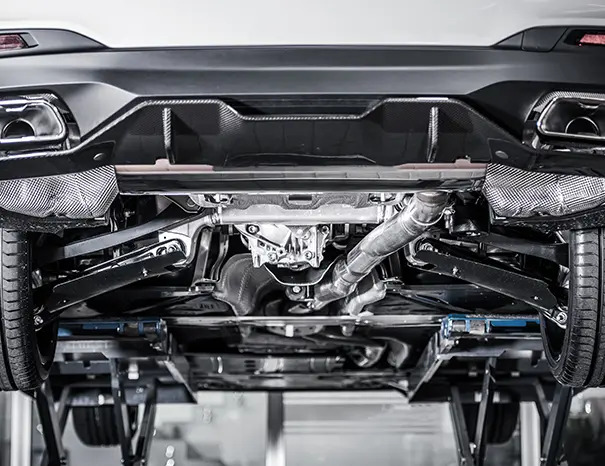
Why Chassis and Cabin Sourcing Carries More Risk Than It Looks
Unlike a trim part or a low-criticality bracket, chassis frames, cross-members and cabin mounting points are structural — they are engineered to carry fatigue loading, vibration and road shock over hundreds of thousands of kilometres without dimensional drift or weld failure. A supplier switch here is not a like-for-like swap. Tooling is programme-specific and expensive to duplicate, dimensional validation and PPAP sign-off take real calendar time, and any downstream quality escape can mean a field failure, a warranty claim, or worse. That is exactly why the evaluation should happen before nomination, not after the first production batch.
Manufacturing Capability: What to Verify Before You Nominate a Supplier
Press Tonnage and Forming Capability
Chassis frames and structural brackets are typically stamped and formed from higher-gauge steel than a trim panel, which demands genuine press capacity — not just a press on the floor, but the right tonnage for the part geometry. Ask any prospective chassis parts manufacturer to walk through their press shop capability, including tonnage range, tooling design support, and how they validate a new die before it goes into production.
Welding Process Control
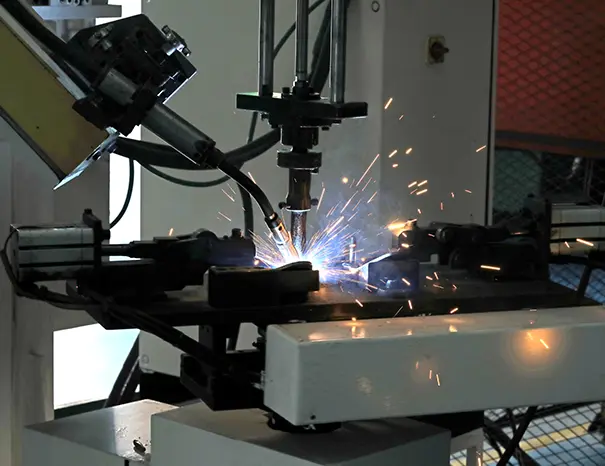
Frame rails, cross-members and cabin brackets are joined into sub-assemblies, and weld quality directly determines structural integrity. Look for a mix of robotic and MIG welding capability — robotic cells reduce weld-to-weld variation on high-volume programmes, while MIG welding gives the flexibility that lower-volume or complex-geometry parts need.
Surface Treatment for Corrosion Resistance
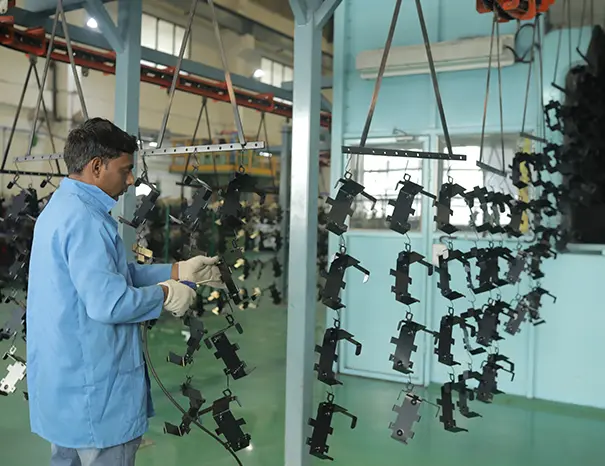
A chassis component that corrodes prematurely is a warranty liability, not a cosmetic issue. Confirm whether the manufacturer runs an in-house PTCED line and conveyorized powder-coating facility, and ask what coating thickness and salt-spray performance they specify and test for as standard.
Dimensional Validation on CMM
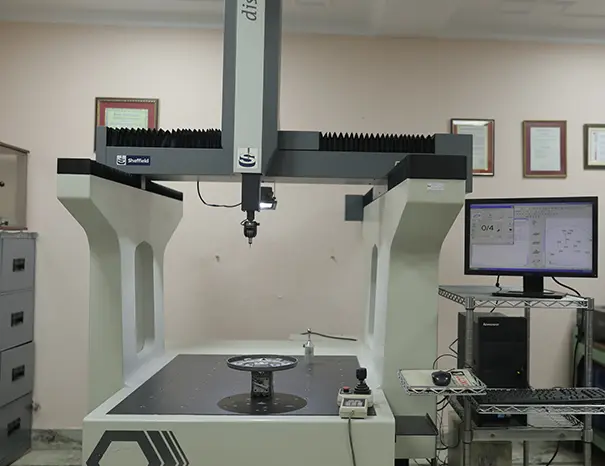
Because chassis parts mate with multiple other systems, dimensional accuracy compounds — a small deviation on a bracket can throw off alignment further down the line. A manufacturer should be able to describe their CMM-based inspection and testing protocol in specific terms: what gets measured, at what frequency, and how non-conformance is escalated back into the process — not just "we do quality checks."
Certifications That Actually Matter for Structural Parts
Certifications are shorthand for audited process discipline, not marketing badges. For chassis and cabin sourcing, the certifications worth verifying are IATF 16949:2016 (automotive quality management), ISO 9001:2015 (general quality management), ISO 14001:2015 (environmental management) and ISO 45001:2018 (occupational health and safety) — see a supplier's full quality profile and certificates rather than taking a logo on a homepage at face value. A D&B D-U-N-S® registration is also worth asking for; it speeds up vendor verification and onboarding on your end considerably.
Development Partner or Just a Vendor?
The strongest chassis suppliers behave like an extension of your engineering team, not just an order-taker. Ask specifically how they handle a new part introduction: Is there a formal drawing and feasibility review before tooling starts? Is tooling developed in-house or outsourced? Does the workflow run through press forming, welding, coating and CMM validation as a controlled, traceable sequence, or is it managed informally? A supplier who can answer these questions in detail — and show you the sequence, not just describe it in general terms — is one who can support a new platform launch, not only repeat an existing part number.
Logistics: Can They Deliver Close to Your Plant?
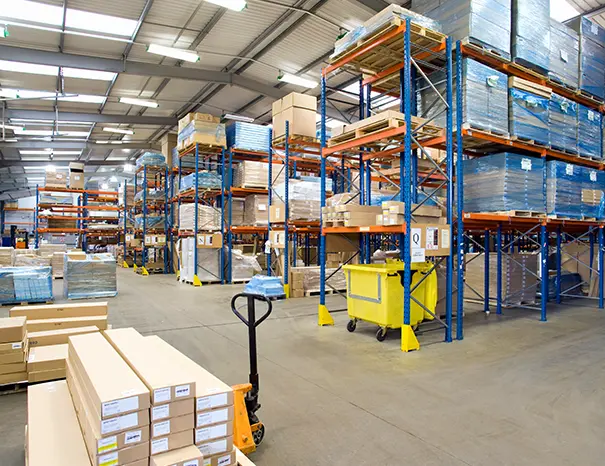
Chassis and cabin components are bulky and freight-sensitive, so warehouse footprint is a real cost and lead-time factor, not a nice-to-have. A supplier with warehouses positioned near major manufacturing clusters — for example, hubs in Pithampur, Jamshedpur, Pune and Chennai alongside the manufacturing plant — can support just-in-time delivery schedules and reduce the safety stock your plant needs to carry.
Track Record Across Vehicle Segments
Chassis geometry, gauge and load requirements differ meaningfully across two-wheelers, passenger vehicles, commercial vehicles, tractors and off-highway equipment. A manufacturer with a demonstrated track record across multiple segments — and an established base of OEM and Tier-1 customers — has already worked through the engineering variability your programme is likely to introduce.
A Practical Chassis Supplier Evaluation Checklist
- Press tonnage matched to your part's gauge and geometry, with in-house tool design and development
- Robotic and MIG welding capability with documented weld-quality controls
- In-house PTCED and/or powder-coating line with defined corrosion-resistance specifications
- CMM-based dimensional inspection integrated into the production workflow, not just final audit
- Current IATF 16949:2016, ISO 9001:2015, ISO 14001:2015, and ISO 45001:2018 certifications support our quality management, environmental management, and occupational health and safety systems.
- D&B D-U-N-S® registration for fast vendor onboarding
- A documented new-part development workflow from drawing review through PPAP-style validation
- Warehouse or distribution presence near your manufacturing location(s)
- Reference customers or case history in your specific vehicle segment
Consolidating Chassis Sourcing With Related Commodities
Many procurement teams are also actively reducing their supplier count. A manufacturer capable of chassis and cabin parts often carries the same press-shop, weld-shop and quality infrastructure needed for brake parts, engine parts and welded assemblies — worth asking about if your sourcing strategy favours fewer, more capable vendors over a fragmented supply base.
Where Presco-Mec Group Fits
Presco-Mec Group has manufactured precision chassis and cabin components in Faridabad, Haryana for more than 38 years, running IATF 16949:2016 certified processes across two production units, with warehouses in Pithampur, Jamshedpur, Pune and Chennai supporting OEM and Tier-1 customers nationally. If you're evaluating a chassis parts manufacturer and supplier for an upcoming sourcing cycle, our engineering team can review drawings, volumes and timelines and respond with a feasibility assessment through our Business Enquiry page. For a related read on how precision manufacturing discipline carries across commodities, see why precision matters in brake component manufacturing.
Presco-Mec Group manufactures structural chassis and cabin components for commercial vehicles, construction equipment, and tractor parts applications, supported by in-house tooling, press shop operations, and OEM-focused quality systems.
Beyond chassis and cabin systems, Presco-Mec Group also manufactures precision brake parts, engine parts, and assemblies for OEM and Tier-1 automotive manufacturers.
FAQs
A: A chassis parts manufacturer designs tooling and produces the components in-house — stamping, welding, coating and inspection all happen under one roof. A chassis parts supplier may simply trade or assemble parts sourced from third parties. For OEM programmes, a combined manufacturer-and-supplier model gives procurement teams a single point of accountability for tooling, quality and delivery, rather than a multi-tier chain with diluted traceability.
A: IATF 16949:2016 is the automotive-specific quality management standard built on ISO 9001, and it mandates process controls such as PPAP, control plans and continuous improvement that are essential for structural, safety-related parts. A chassis parts manufacturer certified to IATF 16949:2016, alongside ISO 14001:2015 for environmental management and ISO 45001:2018 for occupational health and safety, signals audited, repeatable processes rather than one-off quality claims.
A: Timelines vary with part complexity, but a controlled workflow generally moves through engineering and drawing review, in-house tooling development, press-forming trials, welding validation, surface treatment and CMM-based dimensional sign-off before a part is released for series production. Sharing drawings, annual volumes and target timelines early lets a manufacturer give procurement teams a realistic feasibility response instead of an optimistic one.
A: Chassis frames, cross-members and cabin brackets are typically joined using robotic welding for repeatable, high-volume structural joints and MIG welding for flexibility across part geometries. Robotic cells reduce weld-to-weld variation, which matters directly for fatigue performance and long-term structural durability under vibration and road-shock loading.
A: Chassis and cabin components are bulky, and freight cost and lead time both scale with distance. A supplier with warehouses positioned near major OEM manufacturing clusters can support just-in-time delivery schedules and reduce the safety stock a plant needs to carry, which is a meaningful line item over the life of a sourcing programme.
A: Yes, provided the manufacturer's press capacity, tooling expertise and quality systems are built to handle the range of gauges, geometries and load requirements each segment demands. A vendor with proven experience across two-wheeler, passenger vehicle, commercial vehicle, tractor and off-highway platforms is generally better positioned to support a multi-programme OEM than one focused on a single vehicle class.
A: At minimum, share 2D/3D drawings or CAD data, material specification, annual and lifetime volume estimates, target tooling and SOP timelines, surface-finish requirements, and any platform-specific validation or PPAP expectations. The more complete the RFQ package, the faster a manufacturer's engineering team can return an accurate feasibility and costing response.
Conclusion
The right chassis parts manufacturer and supplier should offer proven manufacturing capability, quality assurance systems, engineering support, and reliable logistics that align with your OEM production requirements.
If you are evaluating suppliers for an upcoming OEM program, submit your requirements through our Business Enquiry page to discuss manufacturing capabilities, quality requirements, tooling support, and production timelines.
About the Author
This post was reviewed by Sunil Goyal, Chief Operating Officer, Presco-Mec Group. Sunil brings 28 years of experience in supply chain management and international marketing, including prior roles with Tata, Eicher, Airtel and the Hero Group, and works closely with Presco-Mec's engineering and tool room teams on process capability for OEM and Tier-1 sourcing programs. Connect on LinkedIn: https://www.linkedin.com/in/sunil-goyal-1796442b/
For inquiries, you can reach Presco-Mec Group through the website www.prescomecgroup.co, via email at info@prescomecgroup.com , or on WhatsApp at +91 89299 81200 to discuss your requirements.
Published: 12 August 2026