Monday, 31 August 2026
When purchase and procurement managers evaluate a new engine platform, most of the sourcing conversation understandably centres on the engine block, cylinder head and major cast components. But a modern engine also depends on a family of quieter, equally engineered parts: mounting brackets, oil sumps, timing covers and heat shields — nearly all of them precision sheet metal rather than castings. As an established engine parts manufacturer in India, Presco-Mec Group builds exactly these components, and this article walks through why sheet-metal manufacturing matters so much to engine performance, and what to look for when evaluating an engine parts supplier for your sourcing program.
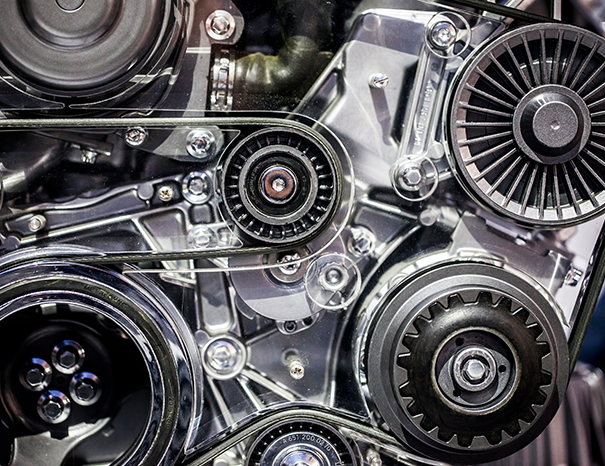
Why Sheet Metal Plays Such a Large Role Inside a Modern Engine
Not every component around an engine needs to be cast or machined. Mounting brackets, sump pans, timing and engine covers, and heat shields are structural or protective rather than load-bearing in the way a crankshaft or block is — which makes them well suited to stamping and forming from steel coil. Sheet-metal manufacturing gives design engineers three advantages that casting struggles to match at the same cost point: lower tooling investment for medium-to-high volumes, significant weight reduction compared with cast alternatives, and the ability to consolidate several functions into one welded sub-assembly instead of multiple machined pieces bolted together.
The Precision Manufacturing Chain: From Coil to Finished Component
A finished engine bracket or cover looks simple on the shelf, but it passes through a disciplined sequence of operations, each of which needs to be right for the part to function reliably under an engine's heat, vibration and pressure cycles:
- Material selection & blanking: the correct steel grade and coil thickness is chosen for strength, formability and weldability before blanking to size.
- Tooling & stamping: dies engineered for the component geometry are run on presses — at Presco-Mec Group, up to 400 tons capacity — to form brackets, covers and sump profiles to drawing tolerance.
- Welding: robotic and MIG welding cells join sub-components into finished assemblies with repeatable weld quality, critical where a bracket must hold its geometry under continuous engine vibration.
- Surface treatment: PTCED (cathodic electro-deposition) and conveyorized powder-coating lines apply uniform corrosion and heat-resistant coatings across complex geometries that manual spraying cannot coat consistently.
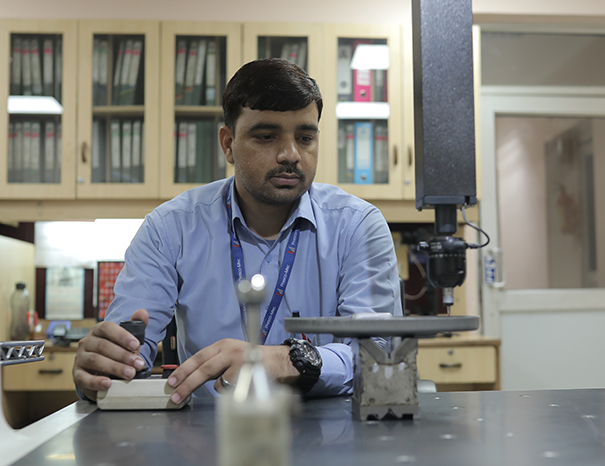
- Inspection: Coordinate Measuring Machine (CMM) verification confirms every critical dimension against the drawing before the part is released for dispatch.
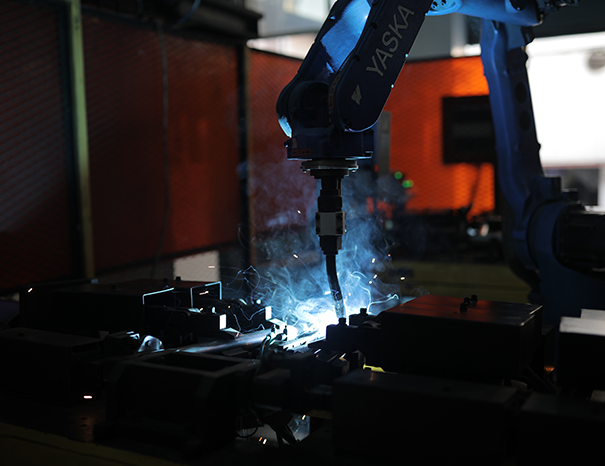
Skip or under-control any one of these steps and the risk shows up later — as a bracket that fatigues early, a cover that traps moisture, or a heat shield that fails to hold its coating. This is why procurement teams evaluating an engine components manufacturer in India should ask not just what a supplier makes, but how each stage of this chain is controlled.
Sourcing Red Flags When Evaluating an Engine Parts Manufacturer
A few warning signs are worth probing before a program is awarded, not after:
- ISO 9001:2015 certification only, with no IATF 16949:2016 — a signal the supplier may not be built for automotive-grade process control.
- Welding, coating or inspection routed to third parties with no visibility into that partner's own quality system.
- No willingness to share CMM reports, PPAP documentation, or a physical/virtual plant walkthrough before award.
- Vague answers on plant address, unit count, or warehouse locations — specifics that a genuine manufacturer will state plainly.
- A sourcing pitch built entirely around price, with no discussion of tooling ownership, capacity headroom, or contingency planning for volume spikes.

A Practical Checklist for Evaluating an Engine Parts Manufacturer
Before shortlisting a supplier for engine sheet-metal components, procurement teams should evaluate the following areas using documented evidence rather than relying solely on a supplier's sales presentation:
- Automotive quality certification: Check whether the supplier holds IATF 16949:2016 and relevant ISO certifications, and verify that the certificates are current and cover the manufacturing site involved in your program.
- Tooling and production capacity: Confirm whether tooling is developed and maintained in-house or through qualified partners, and whether available press capacity is sufficient for your expected production volumes.
- Welding process control: Assess whether welding is manual, semi-automated or robotic, and ask how weld parameters, inspection and process consistency are controlled.
- Dimensional inspection: Determine whether the supplier has in-house CMM or other suitable inspection capability and can provide dimensional reports against engineering drawings.
- Surface-treatment capability: Evaluate whether required coating or corrosion-protection processes are available in-house or through qualified external providers, and how coating quality is verified.
- Traceability and documentation: Check whether the supplier can maintain material, process, inspection and batch-level records required for your quality and vendor-onboarding processes.
- Delivery and contingency planning: Assess production footprint, warehouse coverage, logistics capability and contingency arrangements for equipment downtime or unexpected volume changes.
A supplier that can answer all seven confidently — and back the answers with documentation rather than assurances — is generally a lower-risk choice for an ongoing sourcing relationship.
Red Flags to Watch For When Sourcing Engine Sheet-Metal Parts
- No IATF 16949 certification, or a certification that has lapsed or is pending renewal.
- Welding and surface-treatment work outsourced to third-party job shops with no visibility into process control.
- No CMM or dimensional inspection reports available on request for a sample part.
- A single production unit with no stated backup capacity in case of a line stoppage.
- No traceable business registration details, making vendor-onboarding due diligence difficult.
None of these are automatic disqualifiers on their own, but two or more together are usually a sign to dig deeper before committing volume.
Where Presco-Mec Group Fits
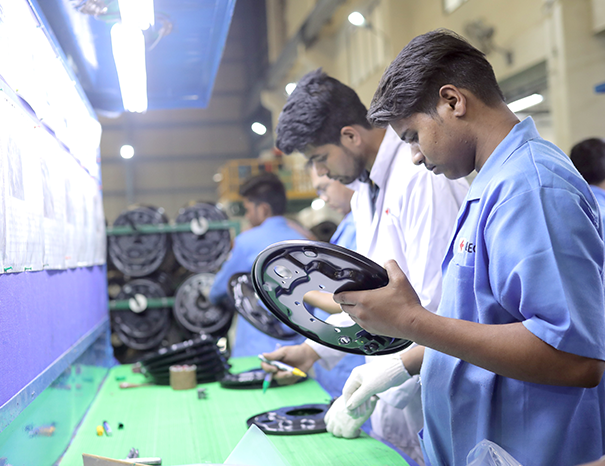
Presco-Mec Group has worked as an automotive engine parts manufacturer in India for more than four decades, running two manufacturing units in Faridabad, Haryana, certified to IATF 16949:2016, ISO 9001:2015, ISO 14001:2015 and ISO 45001:2018. Our press shop, weld shop, PTCED and powder-coating lines and CMM-based inspection sit under one roof, and our D&B D-U-N-S® number (65-006-5357) supports fast vendor verification for procurement teams running formal onboarding processes. A network of warehouses in Pithampur, Jamshedpur, Pune and Chennai supports closer, more predictable delivery across India, and we're proud to be trusted by 10+ leading OEM and Tier-1 customers across two-wheeler, passenger, commercial, tractor and off-highway platforms.
If your team is evaluating suppliers for a new or existing engine parts sourcing program, take a look at Presco-Mec's engine parts range, or reach out directly to discuss your drawings, volumes and timelines.
Request a Quote
Share your engine parts requirements with our engineering team and we'll come back with a feasibility response.
FAQs
Cast and machined parts are formed from molten or solid metal blocks and suit thick, complex-geometry components, while sheet-metal parts are stamped, formed and welded from flat coil into brackets, covers, sumps and heat shields. Sheet metal typically offers lower tooling and unit cost at volume, lighter weight, and faster design iteration.
Cold-rolled and hot-rolled steel coil in various grades and thicknesses are the most common base materials, chosen for strength, formability and weldability, with aluminized or coated variants used where higher heat or corrosion resistance is needed.
Engine-adjacent brackets, covers and sumps generally require tight dimensional and positional tolerances because they mount directly to the engine block, powertrain or chassis and must withstand vibration and thermal cycling. Tolerance requirements are drawing-specific and should be confirmed with CMM inspection reports.
IATF 16949:2016 is the primary automotive quality management certification to verify, alongside ISO 9001:2015, ISO 14001:2015 and ISO 45001:2018, which together confirm process discipline, traceability and compliance readiness for OEM and Tier-1 supply programs.
Corrosion protection is typically applied after forming and welding through cathodic electro-deposition (CED/PTCED) coating and conveyorized powder coating, which give uniform, durable coverage across complex bracket and cover geometries.
A sound checklist covers automotive quality certification, in-house tooling and press capacity, welding process control, in-house dimensional inspection such as CMM, surface-treatment capability, verifiable business identifiers such as a D&B D-U-N-S number, and multi-location warehousing for delivery reliability.
Warning signs include the absence of IATF 16949 certification, no in-house welding or inspection capability, reliance on a single production unit with no backup capacity, an inability to provide CMM data on request, and no verifiable business registration details.
About the Author
This post was reviewed by Sunil Goyal, Chief Operating Officer, Presco-Mec Group. Sunil brings 28 years of experience in supply chain management and international marketing, including prior roles with Tata, Eicher, Airtel and the Hero Group, and works closely with Presco-Mec's engineering and tool room teams on process capability for OEM and Tier-1 sourcing programs. Connect on LinkedIn: https://www.linkedin.com/in/sunil-goyal-1796442b/
For inquiries, you can reach Presco-Mec Group through the website www.prescomecgroup.com, via email at info@prescomecgroup.com , or on WhatsApp at +91 89299 81200 to discuss your requirements.
Published: 31 August 2026