Tuesday, 24 July 2026
Introduction
Brakes are the one automotive system where “good enough” isn’t good enough. When a sourcing team is evaluating a brake parts manufacturer for OEM supply, the decision touches vehicle safety, warranty exposure and program timelines all at once. A caliper bracket that’s out of tolerance, a backing plate with inconsistent material strength, or a supplier that can’t scale from prototype to full-volume production can derail a vehicle programme long after the purchase order is signed.
For procurement and sourcing managers at mid-to-large automotive and specialty machine OEMs, selecting a brake parts manufacturer is less about comparing quotations and more about de-risking the supply chain for the life of a vehicle platform. This guide walks through the criteria that matter most when choosing a brake parts manufacturer for OEM supply — and the red flags that should slow down any RFQ.
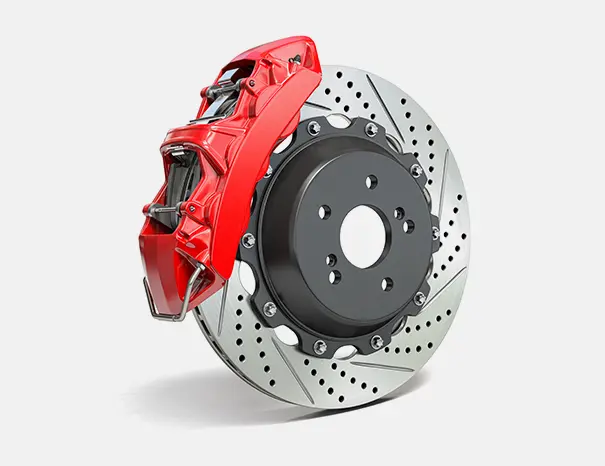
Why This Sourcing Decision Carries More Weight Than a Typical RFQ
Unlike trim or interior components, brake parts are safety-critical and heavily regulated. A supplier switch mid-programme means re-validation, re-tooling and, in many cases, a fresh PPAP cycle. Getting the selection right the first time protects launch timelines and keeps warranty risk off your books.
1. Quality Certifications That Are Actually Audited
IATF 16949:2016 certification manufacturing is the baseline, not a bonus, for any brake parts manufacturer supplying OEMs. It confirms the plant runs a documented, audited automotive quality management system — not just a generic ISO 9001 badge. Layer in ISO 14001:2015 (environmental management) and ISO 45001:2018 (occupational health & safety) for a fuller picture of how disciplined the operation is beyond the production line. Before shortlisting, ask for current certificates and the issuing body, not just a logo on the website.
2. In-House Tooling and Press Capability
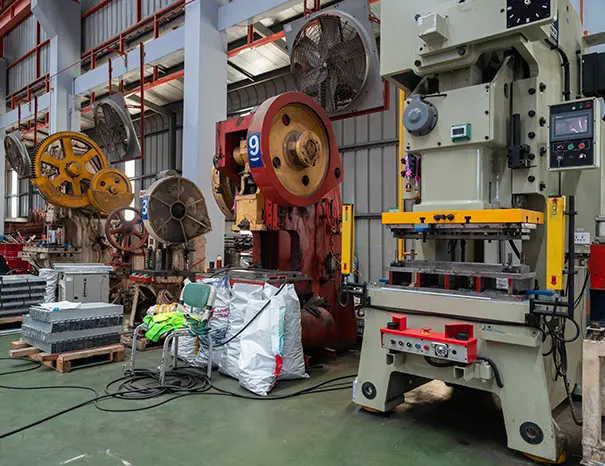
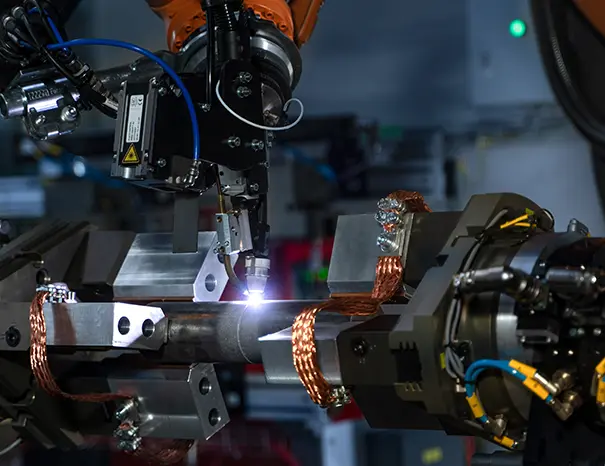
A brake parts manufacturer that designs and builds its own tooling controls its own lead times and repeatability. Ask what press tonnage the plant runs — brake brackets, backing plates and caliper mounts often need presses in the 200–400 ton range — whether welding is manual or robotic, and whether machining is done in-house or outsourced. Every subcontracted step is a point where dimensional control and delivery commitments can slip.
3. Dimensional Precision and Inspection Systems
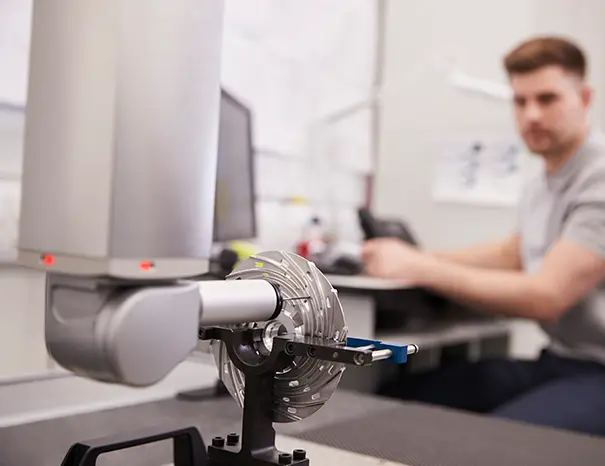
Braking systems operate under extreme heat, friction and vibration, so tolerance stack-up matters more here than almost anywhere else in the vehicle. A serious manufacturer inspects parts on a Coordinate Measuring Machine (CMM), not just gauges, and can explain how precision is engineered into calipers, brackets, backing plates and shims - not just checked after the fact. For a closer look at how this is done in practice, see our post on why precision matters in brake component manufacturing.
4. Surface Treatment and Corrosion Protection
Brake components live in one of the harshest environments on a vehicle — road salt, brake dust, moisture and heat. Confirm whether the manufacturer offers in-house surface treatment such as PTCED (phosphate-based e-coating) and conveyorized powder coating, and ask for salt-spray test data. Outsourced coating adds a vendor, a shipping leg and a quality handoff you don’t control.
5. Breadth of Brake Component Capability
A supplier that only stamps flat brackets isn’t the same as one that manufactures the full range: brake calipers and caliper brackets, backing plates, shims and welded brake sub-assemblies. Broader capability under one roof reduces the number of suppliers you need to qualify for a single braking system and gives your engineering team a single point of contact for design-for-manufacturing feedback.
6. Track Record With OEMs and Tier-1s
Years in business, the number of OEM and Tier-1 customers relationships, and industry recognition are early signals of reliability — but ask for reference customers in your specific vehicle segment (two-wheeler, passenger, commercial, tractor or off-highway), since press tooling and process knowledge don’t always transfer cleanly between segments.
7. Vendor Verification and Business Transparency
A registered D&B D-U-N-S® number, GST and export documentation, and a transparent ownership structure speed up your vendor onboarding and reduce compliance risk — especially where your organisation requires third-party verification before releasing a purchase order.
8. Logistics Footprint and JIT Capability
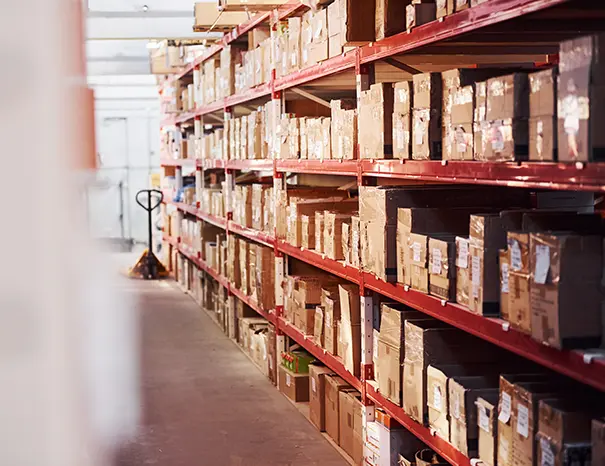
Ask where the manufacturer’s plants and warehouses sit relative to your own facilities. A brake parts manufacturer with a regional warehouse network, including warehouses in Pithampur, Jamshedpur, Pune, and Chennai, can support just-in-time delivery schedules without you carrying extra safety stock and reduce freight risk on time-sensitive production lines.
9. New Product Development Support
If you’re sourcing for a new platform rather than replenishing an existing part number, ask how the supplier handles development: in-house tool design, prototype-to-production transition, and PPAP documentation. A manufacturer that can take a drawing through feasibility, tooling and validation in-house will move faster than one that outsources each stage.
Red Flags to Watch For
- Certificates that are expired, unverifiable, or issued by an unrecognised body
- Reluctance to share CMM inspection reports or process capability data
- No in-house tooling - every new part requires a third-party toolmaker
- A single manufacturing location with no backup site or warehouse network
- Vague answers about welding method (manual vs. robotic) for structural joints
Quick Evaluation Checklist
Before you shortlist a brake parts manufacturer for OEM supply, confirm:
- IATF 16949:2016 and supporting ISO certifications, verified directly with the certifying body
- In-house press, weld and machine shop capability
- CMM-based inspection on every batch, not sample checks alone
- Surface treatment capability (PTCED / powder coating) in-house
- D&B D-U-N-S® registration for fast vendor onboarding
- Multi-location warehousing for JIT delivery
- A documented new-part development and PPAP process
Making the Decision
The right brake parts manufacturer behaves like an extension of your own quality and engineering teams, not just a line item on a purchase order. Presco-Mec Group has supplied precision brake components — calipers, brackets, backing plates, shims and welded sub-assemblies — to OEMs and Tier-1s for more than 38 years, from IATF 16949:2016 certified plants in Faridabad, Haryana, backed by a pan-India warehouse network in Pithampur, Jamshedpur, Pune and Chennai. Explore our brake parts manufacturing capability or share your drawings and volumes to start a feasibility discussion.
FAQs
A: At minimum, IATF 16949:2016 for automotive quality management. Supporting certifications such as ISO 9001:2015, ISO 14001:2015 (environmental) and ISO 45001:2018 (occupational health & safety) indicate a more complete, audited management system across the plant.
A: In-house tool design and press capability give the manufacturer direct control over lead times, repeatability and cost, since every subcontracted tooling step adds a handoff where quality and delivery commitments can slip.
A: Reliable manufacturers validate parts using Coordinate Measuring Machines (CMM) rather than gauges alone, checking dimensional accuracy, material consistency and fitment against the drawing before dispatch, batch after batch.
A: PTCED (phosphate-treated cathodic electro-deposition) coating and conveyorized powder coating are common in-house treatments that protect brake components against road salt, moisture and brake dust over the vehicle's service life.
A: Many OEMs prefer consolidating brake calipers, brackets, backing plates and sub-assemblies with one audited, IATF-certified manufacturer to reduce the number of vendors requiring qualification, while still maintaining an approved secondary source for risk mitigation.
A: Look for manufacturing plants and warehouses positioned near your production facilities. A pan-India warehouse network supports just-in-time delivery and reduces the safety stock and freight risk your plant needs to carry.
A: Share your drawings, annual volumes and target timelines directly with the manufacturer's engineering team so they can return a feasibility response, typically through a business enquiry form or direct email to the sales/engineering desk.
About the Author
This post was reviewed by Sunil Goyal, Chief Operating Officer, Presco-Mec Group. Sunil brings 28 years of experience in supply chain management and international marketing, including prior roles with Tata, Eicher, Airtel and the Hero Group, and works closely with Presco-Mec's engineering and tool room teams on process capability for OEM and Tier-1 sourcing programs. Connect on LinkedIn: https://www.linkedin.com/in/sunil-goyal-1796442b/
For inquiries, you can reach Presco-Mec Group through the website www.prescomecgroup.co, via email at info@prescomecgroup.com , or on WhatsApp at +91 89299 81200 to discuss your requirements.